


Anxiety Apps Evaluation: Finding the Right Digital Solution for Your Mental Health
Over 30 million U.S. adults struggle with anxiety disorders, including generalized anxiety disorder (GAD), social anxiety, and panic disorder (Anxiety Disorders Association of America [ADAA], n.d.). With PTSD and trauma-related conditions frequently co-occurring, the mental health crisis demands urgent attention.
Beyond psychological distress, anxiety disorders are also associated with increased cardiovascular disease risk (Garcia et al., 2024).
The Mental Health Access Crisis
Here’s the perfect storm: 122 million Americans live in mental health shortage areas, with average wait times of 2–3 months to see a therapist. Meanwhile, 59 million adults (23%) have a mental illness, yet about half do not receive treatment (HRSA, n.d.).
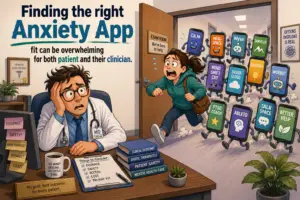
It’s like having a fire department where half the town is burning—and you’re stuck on hold listening to elevator music for 90 days. Clearly, we need digital reinforcements.
At the same time, there are more than 10,000 anxiety and depression-related apps available to users, each offering different therapeutic approaches and targeting different conditions (Balaskas et al., 2021).
Here’s an uncomfortable truth: downloading a random anxiety app and expecting it to fix your GAD is roughly equivalent to Googling “chest pain” and concluding you just need more water. It might work out fine—or you might have completely missed a heart attack.
Understanding how anxiety apps are classified, what conditions they are indicated for, and how they deliver therapy is not bureaucratic fine print. It is the difference between choosing a tool that actually helps and wasting time while your condition goes untreated.
This write-up provides insight into the indications and intervention methods of top-performing anxiety apps. By the end of this post, you will know what to look for—and perhaps more importantly, what to ignore.
Decoding Anxiety Apps: Regulation, Technique, and What They’re Actually Built to Treat
1. Regulatory Status of Anxiety Apps: Prescription vs. Over-the-App-Store
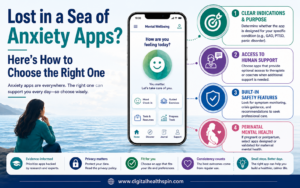
The most clinically meaningful divide is between FDA-cleared prescription digital therapeutics (DTx) and the vast majority of consumer wellness apps.
On the prescription side, DaylightRx is an FDA-cleared digital therapeutic indicated for generalized anxiety disorder in adults (Big Health, n.d.). In contrast, most of the 10,000+ apps available today have no regulatory oversight, meaning their efficacy claims are largely unverified.
This doesn’t make them useless—but it does mean the burden of judgment falls on the user (and ideally their clinician).
2. Therapeutic Techniques of Anxiety Apps: The Evidence-Based Toolkit
Across both prescription and consumer anxiety apps, several evidence-based psychological frameworks dominate:
- Cognitive Behavioral Therapy (CBT): Targets maladaptive thought patterns and behaviors (Afshari et al., 2023).
- Dialectical Behavior Therapy (DBT): Focuses on emotional regulation and distress tolerance (Afshari et al., 2023).
- Mindfulness and Meditation: Used by platforms like Headspace and Calm to reduce stress and improve emotional regulation (Headspace, n.d.; Calm, n.d.).
- Heart Rate Variability (HRV) Biofeedback: Targets physiological stress responses (Chalmers et al., 2014).
In short, most apps are not inventing new therapy—they are repackaging proven methods into more accessible formats. anxiety
3. Delivery Method: How Anxiety App Therapy Reaches You
Therapeutic content is delivered through three main models:
- AI Chatbots (e.g., Wysa, Woebot) (Wysa Ltd., n.d.; Woebot Health, n.d.)
- Structured Programs (e.g., DaylightRx, SilverCloud) (Big Health, n.d.; Amwell, n.d.)
- Gamified Systems that reinforce engagement
- Access to community forums/support groups
- Access to human coach/therapist
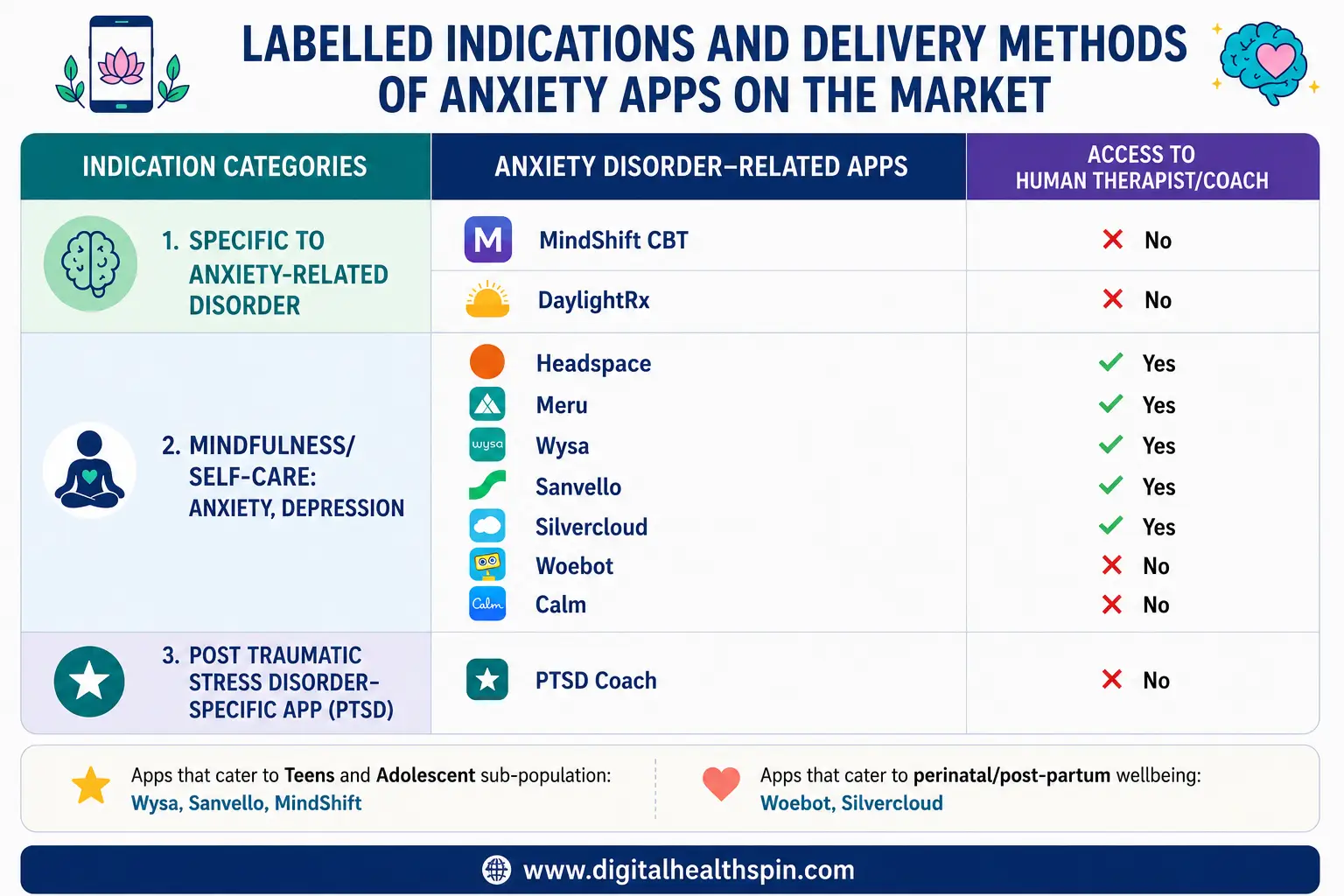
Some platforms—including SilverCloud, Sanvello, and Headspace,Meru Health, Wysa—also offer access to human coaching or therapy support (Amwell, n.d.; AbleTo, n.d.; Headspace, n.d.).
Some Apps cater to specific populations that are often ignored: Sanvello, Wysa, Mindshift lay claim to include Teens and Adolescents in their offering.
Woebot and Silver cloud mentioned functionalities for peri-natal and post-partum wellbeing.
Think of it less like choosing a treatment philosophy and more like choosing a learning style: some people need structure, some need conversation, and others need a streak counter yelling at them like a slightly passive-aggressive fitness coach.
Different formats work for different people—and the best app is the one you’ll actually use consistently.
4. Scope of Clinical Indications of Anxiety Apps: Narrow vs. Broad Scope
Apps differ significantly in what they are designed to treat:
- Narrow indication:
- Example: DaylightRx → GAD-specific (Big Health, n.d.)
- Broad indication platforms:
- Example: Meru Health, Sanvello → anxiety, depression, stress (Meru Health, n.d.; AbleTo, n.d.)
This distinction matters. A narrowly targeted app is often backed by condition-specific evidence, while broader platforms provide flexibility but may dilute precision.
Matching an app’s scope to your specific diagnosis, rather than selecting based on marketing language alone, is critical for effectiveness.
Like ice cream, these anxiety Apps come in many “flavors,” each using different therapeutic approaches. Matching the scope of an App to your situation will feel like the right ice cream flavor on a hot summer day
Ahmed-Digital Doc Tweet
Digital health 360 degrees lens
We are facing a mental health crisis driven in part by a shortage of trained professionals—especially in rural areas.
This gap is unlikely to close quickly due to the time and complexity required to train clinicians (HRSA, n.d.).Digital mental health tools offer a bridge solution.
Think of anxiety apps like those temporary metal bridges you see during highway construction: they are incredibly useful, they get you across the gap, but nobody is confusing them with a permanent six-lane freeway.
Like ice cream, these apps come in many “flavors,” each using different therapeutic approaches.
However, due to the limited number of rigorous validation studies for most apps, we do not recommend them as standalone treatment for moderate to severe anxiety disorders.Instead, they are best suited for: Maintenance therapy in stable patients and adjunctive support alongside professional care.
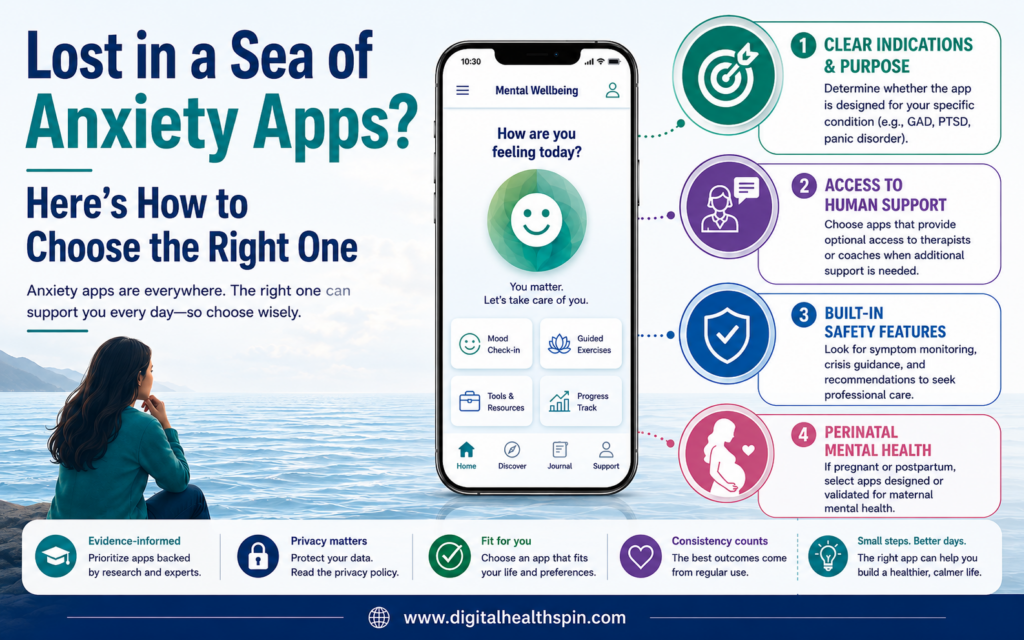
Because mental health disorders arise from complex biological, psychological, and social factors, we favor platforms that incorporate human support—such as access to therapists or coaches—over fully automated systems.
We also favor apps with built-in safety features, such as:
- Alerts when symptoms worsen
- Guidance to seek professional care
- Crisis resources
Ultimately, the goal is not to replace clinicians—but to extend their reach.
**Warning: The post is not meant to treat diagnose or treat any condition rather to serve as a guide with the help of your metal health professional.
References:
Anxiety Disorders Association of America. (n.d.). Facts and statistics. https://adaa.org/understanding-anxiety/facts-statistics
Balaskas, A., et al. (2021). The functionality of mobile apps for anxiety. JMIR mHealth and uHealth. https://mhealth.jmir.org
Big Health. (n.d.). Daylight digital therapeutic. https://www.bighealth.com
Calm. (n.d.). Calm app. https://www.calm.com
Chalmers, J. A., et al. (2014). The relationship between heart rate variability and emotion regulation. PMC. https://pmc.ncbi.nlm.nih.gov/articles/PMC4092363/
Garcia, et al. (2024). Anxiety and cardiovascular risk. PubMed. https://pubmed.ncbi.nlm.nih.gov/38389520/
Headspace. (n.d.). Headspace app. https://www.headspace.com
HRSA. (n.d.). Health workforce shortage areas. https://data.hrsa.gov
Meru Health. (n.d.). Meru Health program. https://www.meruhealth.com
Amwell. (n.d.). SilverCloud digital mental health platform. https://silvercloud.amwell.com
AbleTo. (n.d.). Sanvello app. https://www.sanvello.com
Wysa Ltd. (n.d.). Wysa app. https://www.wysa.com
Woebot Health. (n.d.). Woebot app. https://woebothealth.com